
How Telemedicine Software Can Improve Healthcare Workflows
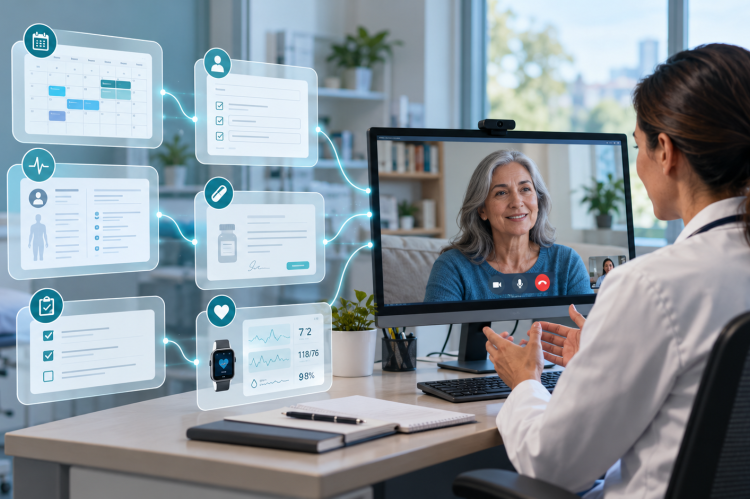
A virtual consultation may save a patient a trip to the clinic, but it doesn't automatically make healthcare operations more efficient. Your staff still needs to schedule appointments, collect patient information, update medical records, manage prescriptions, and coordinate follow-up care.
When these activities happen across disconnected systems, telemedicine can create additional administrative work instead of reducing it.
Telemedicine software improves healthcare workflows by connecting scheduling, patient intake, virtual consultations, electronic health records (EHRs), documentation, and follow-up into a coordinated process. With the right integrations, you can reduce repetitive tasks, improve information access, and help care teams work more efficiently.
But the real advantage isn't simply offering virtual appointments. It's improving everything that happens before, during, and after them.
Let’s see how a telemedicine software improves healthcare workflows!
Why Healthcare Workflows Need More Than Video Consultations
Traditional healthcare workflows often involve multiple systems and manual handoffs. Your scheduling team manages appointments, clinicians access patient records, and administrative staff handle billing and follow-up communication.
Adding a standalone video platform doesn't necessarily connect these activities.
For example, if consultation notes must be transferred manually into an EHR, you've introduced another step into an already complicated process.
The U.S. Department of Health and Human Services (HHS), in its telehealth workflow guidance, emphasizes the importance of coordinating scheduling, check-in, consent, documentation, and billing.
Hence, when planning a virtual-care platform, your requirements for a telemedicine application development company should therefore cover the complete patient journey, not just video functionality.
How Telemedicine Software Improves Healthcare Workflows
Telemedicine software can improve healthcare workflows by connecting routine tasks, reducing manual coordination, and making patient information easier to access. Here's how these capabilities help your healthcare team work more efficiently before, during, and after virtual consultations.
1. Streamlines Appointment Scheduling and Patient Intake
Manual scheduling requires your staff to coordinate availability, confirm appointments, collect information, and send reminders. Telemedicine software can bring these activities into a connected digital workflow.
With the software, patients can:
- Book suitable appointment slots
- Complete intake forms
- Submit required information, and
- Receive consultation instructions before their visits
For your staff, this means less time spent coordinating routine pre-appointment activities and more time handling cases that require personal assistance.
2. Connects Virtual Consultations With Patient Records
A virtual appointment becomes less efficient when clinicians have to switch between separate applications to review patient history, document findings, and update treatment plans.
Integrating telemedicine software with EHR and EMR systems can help clinicians access relevant records during consultations and maintain documentation within existing clinical workflows.
Healthcare interoperability standards such as FHIR, along with appropriate APIs, can support information exchange between compatible systems.
For instance, after a virtual consultation, a clinician can document the encounter, initiate an electronic prescription, and arrange follow-up without manually transferring information between disconnected applications.
The result is fewer unnecessary handoffs and better information continuity.
3. Reduces Repetitive Administrative Work
Telemedicine can simplify administrative processes when appointment information, clinical documentation, and billing systems work together.
Consider what happens after a consultation. Your team may need to update visit status, prepare billing information, send instructions, and schedule another appointment.
When supported by integrated workflows, some of these activities can be initiated automatically or completed using information already collected.
However, automation isn't guaranteed to reduce workload.
A 2024 study found that primary-care physicians experienced additional EHR work on days combining telemedicine and in-person consultations.
This highlights an important distinction: introducing software isn't the same as improving a process. You need to eliminate unnecessary steps rather than digitize them.
4. Improves Care Coordination and Follow-Up
Healthcare workflows don't end when a consultation finishes.
Patients may need medication instructions, laboratory tests, specialist referrals, or follow-up appointments. Without a coordinated process, these activities can depend on manual communication between departments.
Telemedicine platforms can support post-visit coordination through secure messaging, digital care instructions, appointment reminders, and integrated clinical tasks.
For example, after reviewing a patient's condition, a clinician can initiate follow-up scheduling while relevant information remains accessible to authorized care team members.
This reduces the risk of disconnected communication and helps patients understand their next steps.
As SocPub's discussion of industry-specific software illustrates, technology creates business value when it addresses actual operational requirements.
5. Extends Care Through Remote Patient Monitoring
Virtual consultations provide information at a particular point in time. For some patients, however, healthcare teams also need visibility between appointments.
This is where remote patient monitoring (RPM) becomes useful.
Connected blood pressure monitors, glucose meters, and other supported devices can collect relevant health measurements outside clinical facilities.
And through IoT in telemedicine, appropriate device data can become part of a broader remote-care workflow.
For example, a care team monitoring a patient with hypertension may review submitted blood pressure readings and determine whether additional clinical attention is needed.
However, collecting more data isn't enough. You also need clear responsibilities for reviewing readings, handling alerts, and escalating concerning results.
What Makes Telemedicine Workflow Integration Successful?
Successful implementation depends on how well the technology fits your healthcare operations.
Four factors deserve particular attention:
- System interoperability: Ensure your platform can exchange relevant information with EHRs, scheduling tools, billing systems, and other existing applications.
- Security and privacy: Use appropriate access controls, encryption, secure communication, and audit logging. Applicable HIPAA requirements must be addressed when handling protected health information.
- Staff usability: Define responsibilities for patient intake, technical assistance, clinical documentation, and follow-up before introducing new software.
- Patient accessibility: Provide clear instructions and alternative arrangements where needed for patients facing connectivity, accessibility, or digital literacy barriers.
Implementation challenges often arise when organizations prioritize technical features without reviewing existing processes.
How Can You Measure Telemedicine Workflow Improvements?
To understand whether telemedicine is improving operations, measure more than the number of virtual consultations completed.
Useful indicators to measure the workflow improvements include:
- Appointment efficiency: Time spent scheduling, checking in, and preparing patients.
- Administrative workload: Duplicate data entry and manual coordination activities.
- Documentation efficiency: Time required to finalize clinical records.
- Follow-up completion: Whether patients complete recommended next steps.
- Patient experience: Appointment attendance, technical difficulties, and satisfaction.
Compare these measures before and after implementation. This helps you identify where software is removing friction and where additional workflow changes are necessary.
Conclusion
Telemedicine software can improve healthcare workflows, but its value extends beyond enabling remote consultations.
When scheduling, patient intake, clinical records, documentation, and follow-up operate as connected processes, your healthcare organization can reduce unnecessary administrative steps and improve care coordination.
However, successful implementation requires more than selecting a platform.
- Compatible systems
- Well-defined staff responsibilities
- Secure information handling, and
- Measurable operational goals
Ultimately, the objective isn't to make every healthcare interaction virtual. It's to make virtual and in-person care work together more effectively.