A Look at WordPress and Drupal for Creating Websites


Jahia, a leading "user experience platform" open source vendor, announced a new release for their flagship product, Digital Factory 7.1. According to Jahia, with this new release they are introducing significant scalability, stability and performances improvements while further refining user experience for Authors, Developers and Administrators.
For those a little unclear what a UXP does, Gartner defines such platforms "as an integrated set of technologies used to provide interaction between a user and a set of applications, processes, content, services or other users". Elie Auvray, CEO of Jahia Solutions Group SA, adds:
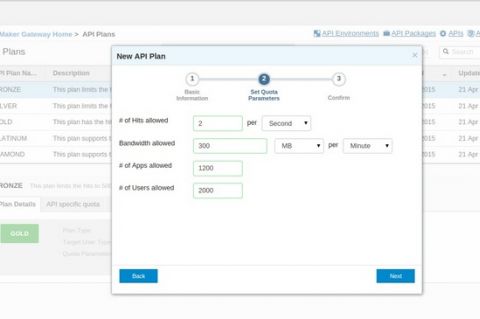
APIs are nothing new. The application programming interface used by developers as routines, protocols, and tools for building software applications has been around for some time. APIs are used as building blocks that allow programmers to write an application much quicker and more efficiently than would happen without APIs. Despite APIs being around for quite some time, I can't tell you how many times this year non-developers have approached me to talk about APIs. APIs is no longer a topic just being discussed by developers but also by their managers and even the company executives.
The Google Mobile Friendly Update was launched on April 21st 2015. The update is designed to address the fact that more and more people are browsing and searching on the web from their mobile devices. According to Google:
Starting April 21, we will be expanding our use of mobile-friendliness as a ranking signal. This change will affect mobile searches in all languages worldwide and will have a significant impact in our search results. Consequently, users will find it easier to get relevant, high quality search results that are optimized for their devices.
This Tuesday, March 24, 2015, the Drupal community lost Aaron Winborn who was diagnosed with ALS a few years ago. In honor of Aaron, the Drupal Association and Angie Bryon recently announced the Aaron Winborn Award. The announcement reads as is:

Java. You can’t beat the classic when it comes to development languages for an enterprise-level content management system (ECM). Compared to .NET, PHP, or C# Java is still the top development language for its reliability, stability and suitability for “building back-ends for modern enterprise-web applications. With Java and frameworks based on it, web developers can build scalable web apps for a variety of users.”

Over the years, I've talked about building a range of simple websites for personal use to implementing very complicated proprietary and open source enterprise content management systems. What I haven't talked about is the cost of building and maintaining those websites. Honestly, I've been too embarrassed for how little I spend and too stunned by the price tag for what the big companies pay for their websites. Who Is Hosting This? sent us a graphic that we thought represented the typical costs small to medium size businesses can expect when building and hosting their new websites. So good was the infographic that we decided to post it here.
Jimmy Atkinson from The Web Hosting Database recently sent us a note about WHdb.com updating their Top 50 Drupal Reference & Tutorial Sites. Jimmy asked us to help spread the word about the page (see his email attached below).
Mobile compatible, mobile optimized, responsive web design and adaptive web design are all terms that have been used interchangeably, and often incorrectly, to describe websites displayed, and used, on mobile devices.
If you're a business or organization interested in making your website look and behave just as spiffy on a mini-tablet as on your widescreen monitor, there are a few routes you could take to this destination.
The two we discuss here are: (1) adaptive web design and (2) responsive web design.
