
Business Owners Are Sitting on an Overlooked Source of Working Capital They Already Own
How founders can look beyond traditional financing to unlock liquidity already sitting in their offices or homes

For entrepreneurs, cash flow is often the difference between pursuing an opportunity and postponing it. Whether the goal is purchasing inventory, expanding operations, hiring employees, investing in marketing, or simply navigating an unexpected expense, access to working capital remains one of the most persistent challenges facing business owners.
Recent business sentiment underscores just how widespread these challenges have become. According to the latest U.S. Chamber of Commerce Small Business Index, 53% of small business owners identify inflation as their biggest concern, while nearly one-third say cash flow has become their most pressing operational challenge. Meanwhile, the National Federation of Independent Business reported its Small Business Optimism Index measured 95.3 in May 2026, remaining below its long-term average as entrepreneurs continue navigating economic uncertainty and elevated operating costs.
When liquidity is needed, many entrepreneurs instinctively look toward traditional financing options. Business loans, lines of credit, merchant cash advances, and credit cards have long been the go-to solutions. While each can play an important role, they also introduce new obligations through interest payments, repayment schedules, or additional leverage on the balance sheet.
For many founders, the challenge is not simply finding capital. It is finding capital without adding additional monthly obligations or diluting ownership. That reality has prompted more business owners to evaluate every potential source of liquidity they already control before taking on new debt, particularly when temporary cash flow needs may be solved through existing assets rather than additional borrowing.
What many business owners rarely consider is that they may already possess an untapped source of liquidity.
Across the country, valuable assets often sit forgotten in dresser drawers, office safes, filing cabinets, and home vaults. Old gold jewelry, inherited collections, broken chains, bullion, gold coins, luxury watches, and other precious metal items frequently remain untouched for years. They are viewed as sentimental keepsakes or forgotten possessions rather than financial assets that may help support business objectives when the need arises.
This represents a growing shift in how entrepreneurs are beginning to think about personal wealth. Rather than separating business finances from personal assets entirely, some owners can now take a broader view of their overall financial picture. Instead of immediately assuming they need to borrow money, they can first evaluate whether dormant assets can provide liquidity without creating new debt obligations.
That approach becomes particularly relevant when assets have appreciated significantly over time. Many gold items currently sitting in homes and offices were purchased or inherited years, or even decades, ago when precious metal prices were substantially lower. Owners frequently underestimate what those items may be worth in today's market simply because they have never had them professionally evaluated.
Historically, however, obtaining a reliable valuation often meant visiting pawn shops or local buyers where pricing could vary widely and the process lacked transparency. Many consumers walked away uncertain whether they had received an accurate assessment or fair offer.
Technology is beginning to modernize that experience. Companies such as Unvault are applying artificial intelligence, computer vision, real time market pricing, and professional authentication to help consumers better understand the current market value of their gold jewelry and other precious metal assets.
As gold prices continue hovering near historic highs and with an estimated $750 billion worth of gold jewelry sitting in US households per reports, Unvault’s AI-powered financial technology platform that helps users understand, track, and, if they choose, sell gold jewelry and other precious metal assets. It does this through transparent valuation technology, market pricing, portfolio tracking, and professional authentication. By combining artificial intelligence with human verification, the company aims to modernize one of the world's oldest asset categories while giving consumers greater visibility into their personal wealth.
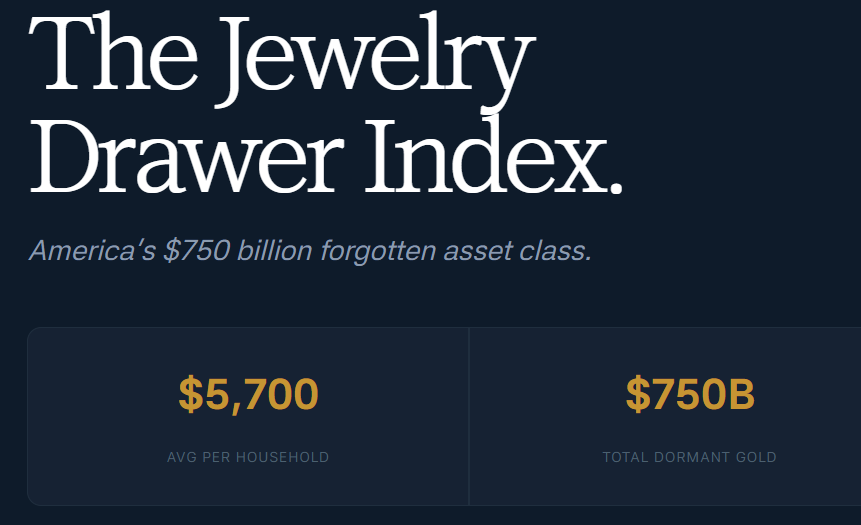
Rather than relying on guesswork, users can upload photographs, receive transparent AI assisted valuations, build digital portfolios, monitor values over time, and decide whether selling makes financial sense. The platform emphasizes that owners remain in control throughout the process, allowing them to evaluate their options before making any decision.
This represents more than simply creating another resale marketplace. It reflects a broader evolution in personal finance, where assets once considered financially inactive can become part of a more comprehensive wealth management strategy.
For business owners, that distinction is key. The importance of that shift extends well beyond individual entrepreneurs. The U.S. Small Business Administration reports there are more than 36.2 million small businesses nationwide, representing 99.9% of all U.S. businesses and contributing 43.5% of the nation's gross domestic product. For a sector that serves as the backbone of the American economy, improving access to flexible sources of working capital can have an impact far beyond any single company.
Working capital does not always have to originate from a lender. Sometimes it can come from recognizing value that already exists.

That does not mean entrepreneurs should liquidate every valuable possession they own. Sentimental family heirlooms, collectible pieces, or assets intended for future generations may carry significance far beyond their monetary value. Likewise, selling precious metals should never replace sound financial planning or long-term business strategy.
Instead, the opportunity lies in understanding what assets are available and making informed decisions based on accurate information.
For some entrepreneurs, liquidating unused jewelry or precious metals may provide enough capital to launch a marketing campaign, purchase equipment, finance seasonal inventory, bridge temporary cash flow gaps, or invest in growth initiatives without increasing debt.
For others, simply knowing the value of these assets adds another dimension to their overall financial planning. Just as investors routinely monitor retirement accounts, brokerage portfolios, and real estate values, understanding the current value of personal precious metal holdings can create greater visibility into total household wealth.
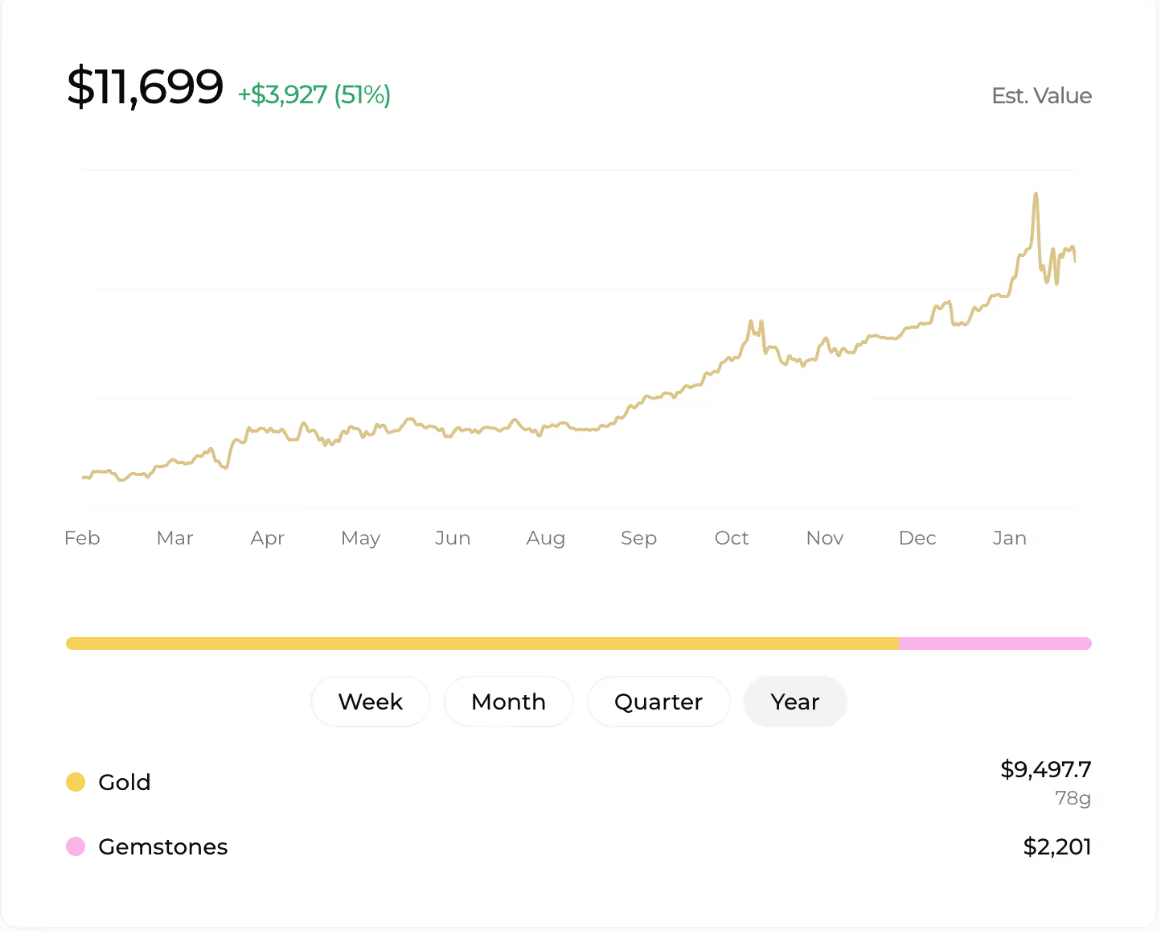
Transparency has become an increasingly important expectation across virtually every financial category. Consumers can monitor investment portfolios in real time, track home values online, and review banking activity instantly from a smartphone. Yet personal jewelry, despite often representing thousands or even tens of thousands of dollars in value, has historically remained one of the least understood assets people own.
Modern valuation technology is helping close that gap. By combining artificial intelligence with market pricing, authentication, and portfolio management, platforms like Unvault are helping transform jewelry from something people simply store into something they can accurately value, monitor, and evaluate as part of a broader financial strategy. The company describes this as turning "financial power sitting in your drawer" into actionable financial intelligence through transparent valuations and portfolio tracking.
Entrepreneurs have always excelled at finding opportunity where others see limitations. They routinely evaluate underperforming inventory, idle equipment, excess real estate, and unused intellectual property as potential sources of value. Personal assets deserve the same thoughtful assessment.
In today's business environment, maintaining flexibility often matters as much as maximizing revenue. Every entrepreneur hopes to avoid unnecessary borrowing, preserve optionality, and strengthen financial resilience whenever possible.
Sometimes the next source of working capital is not sitting at a bank. It may already be sitting in a drawer.
~~~
Entrepreneur Leadership Network member Merilee Kern, MBA, is a highly regarded brand strategist and analyst who reports on cultural shifts, trends, and notable industry leaders across both B2C and B2B sectors. Her work covers a broad range of categories, including field experts, thought leaders, brands, products, services, destinations, and events. As Founder, Executive Editor, and Producer of The Luxe List International News Syndicate, Merilee is a respected voice in the business, lifestyle, travel, dining, and leisure industries. She stays attuned to the market, discovering innovative must-haves and unique experiences at all price points. Her work reaches millions worldwide through broadcast TV (including her own shows and numerous others on which she appears) as well as a variety of print and online publications. Connect with her at www.TheLuxeList.com / Instagram www.Instagram.com/MerileeKern / Twitter www.Twitter.com/MerileeKern / Facebook www.Facebook.com/MerileeKernOfficial / LinkedIN www.LinkedIn.com/in/MerileeKern.
Sources:
https://www.uschamber.com/small-business/small-business-index
https://www.nfib.com/surveys/small-business-economic-trends/
https://advocacy.sba.gov
https://advocacy.sba.gov/2026/02/03/frequently-asked-questions-about-small-business-2026/