Technology

Dethroned: Content Is No Longer King

I spent most of the last two weeks camping and hiking in the Grand Teton National Park of northwest Wyoming. If you've never visited this national park then take my word on it that Grand Teton is one of the most beautiful places a person can visit in this world. The mountains in this place peak near 13,800 feet and rise from the valley by almost 7,000 feet. Despite the warm summer much of the United States experienced, ice glaciers can still be accessed through a number of day hikes. For anyone that loves the outdoors, this place has everything in the form of wildlife, scenery, and activities. Unfortunately (or fortunately depending from your perspective), what the Grand Teton doesn't have is good 3G or 4G cell phone coverage.
I purchased the Google Nexus 7 tablet

If you follow me on Google+ or Twitter, you likely already know that I am not a tablet fan. I know the statement is contradictory when coming from a techy person like me. I have a hard time seeing the benefit of a tablet in my day to day life. I already own a great smartphone (the Android-based Droid Razr) and I prefer the ease of a physical keyboard on my computer and notebooks when writing content is crucial. Overall, I'm just not convinced that a tablet will allow me to do anything more than what my current devices already do. Perhaps this is a sign of my age, but I lost my "wow" some time ago for new technology.

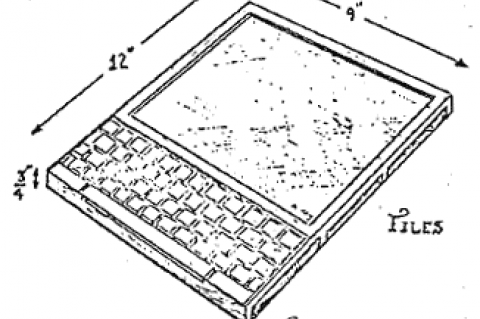
Who really invented the tablet?

The 1994 Knight-Ridder video I attached at the bottom of this post  is a fantastic reminder that the tablet predates the iPad and Android tablet by many decades. During the "hypermedia" era of the late 1980's, I can recall taking a "tech of the future" class where my professor discussed in similar detail what a tablet might look like in the future. He described a day where students would be sitting under trees reading not from paper books but utilizing exactly what we know today as the digital tablet. 

 Believe it or not though, the origins of the tablet computer date back to the 19th century.

Technology Break 2011

As I have done each and every year in the summer, I will be taking my annual break from technology. Through the month of August, I'll be decreasing my postings and management of this site in hopes of using the time to broaden my perspective. I need to spend some time recharging my batteries and my enthusiasm for content management systems as well as information technology in general.

How YouTube and the Social Web Saved Winter

My back hurts. As with the rest of the United States, my neck of the woods has received more snow and cold weather than one could possibly want for the winter season. Due to the constant snowfall, I have spent a number of my days clearing my driveway from snow with the help of my 15 year old snow blower. Several days ago, the snow blower's auger died on me leaving me with a useless rusting piece of machinery.

Auger Belts

1. Remove the plastic belt cover on the front of the engine by removing two self-tapping screws. See figure 23.

2. Drain the gasoline from the snow thrower or place a piece of plastic under the gas cap.

Dilbert: Identifying the top person in the Land of Cubicles

If you have ever worked for a large organization, you should easily relate to this Dilbert cartoon. As the IT guy trying to make everyone happy at work, I've spent the last year making sure everyone that needs two monitors gets two monitors. It's not an easy task in an era of tight budgets and cycle replacements but we're getting there...

Click to go to Dilbert.com

Ready or not: Content management is going mobile

Not having the opportunity to own an iPhone due to lack of coverage by phone carrier AT&T, I haven't been a smartphone user. Then a few weeks ago my carrier, Verizon, introduced the Motorola Droid and I purchased my first smartphone.  Since then, I've been carrying the Droid where ever I go and taking full advantage of the phone's features.

I do not like the word Smart

I was reading an article this morning regarding the use of ARM-based chips in a number of devices including "smartbooks". It appears the industry would like you to now call those smaller and less powerful laptop computers a smartbook instead of netbook.

To describe these devices as a smartbook is idiotic marketing for two reasons. First, "netbook" is a term that has been around for two years and most people today recognize the term being applied to smaller sized notebooks. When you hear the question, "What is a smartbook?" it seems very natural to just answer by replying, "a smartbook is a netbook". Secondly, I have to say it's very moronic (worse than ironic) to call a dumbed-down notebook a smartbook. At least when you say "smartphone" it is in reference to increased functionality over the traditional mobile phone and not less functionality.

I do not like the word "smart" being attached to devices and applications that are far from actually being intelligent on their own. Is marketing that insecure in the devices they're selling that they need to attach the word "smart" to cover up their own lack of intelligence? I have a theory that any time we attach the word "smart" to software or devices it is inviting doom into our lives.